FCA Delivery Terms | Incoterms 2020
FCA delivery terms – what does this term mean? In the previous article, I explained EXW Delivery Terms, including who bears the risks associated with the transport of goods and what the respective obligations of the seller and the buyer are.
The second rule for any mode or modes of transport is FCA (Free Carrier) – Free Carrier … (named place of delivery).
Example: FCA London Incoterms 2020
FCA Delivery Terms | Delivery and Risk
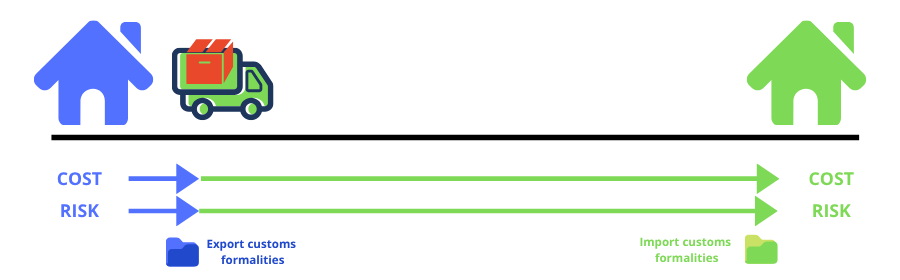
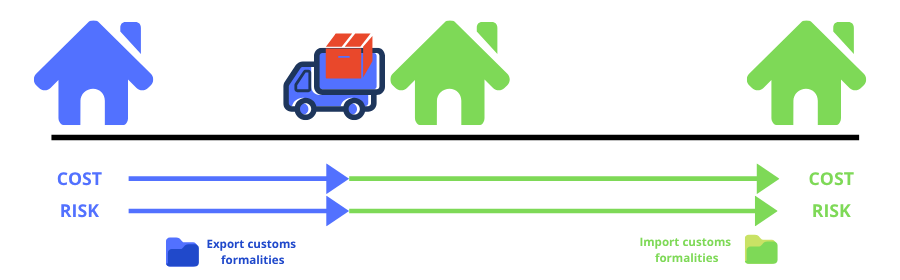
FCA (Free Carrier) – “Free Carrier …” means that the seller delivers the goods to the buyer in one of two possible cases:
- the named place is the seller’s premises – the goods are delivered when they are loaded onto the means of transport arranged by the buyer;
- the named place is a place other than the seller’s premises – the goods are delivered when, after being loaded onto the seller’s means of transport, they reach the named place and are ready for unloading and at the disposal of the carrier or another person nominated by the buyer.
One of the above-mentioned places is the point at which both costs and risk pass to the buyer.
FCA Delivery Terms | Mode of Transport
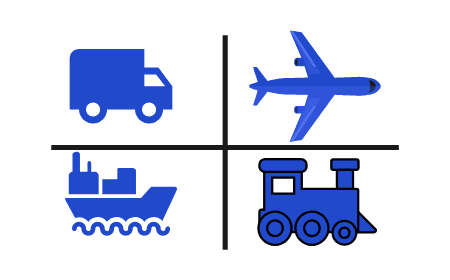
The FCA Incoterms 2020 rule can be used for any mode or means of transport. More than one mode of transport may also be used for this type of delivery.
FCA Delivery Terms | Place or Point of Delivery
A sale under FCA terms may specify only the name of the place of delivery (whether at the seller’s premises or elsewhere) without identifying a specific point of delivery within that named place. It is advisable for the parties to specify the exact point within the named place of delivery as precisely as possible.
An agreed point makes it clear to both parties when the goods have been delivered and when the risk passes to the buyer. This point will also be the place from which the costs are borne by the buyer.
If a specific point of delivery is not specified in the contract, it is assumed that the parties have left the seller to select the point “that best suits its purpose”.
FCA Delivery Terms | “On-board” Notation on Bills of Lading
In response to changing market needs, the FCA Incoterms 2020 rule introduced an additional option for the first time – a bill of lading with an “on-board” notation, confirming that the goods have been loaded on board.
The buyer and the seller may require such a bill of lading, provided they have agreed in advance who must provide the document and when.
If the seller and the buyer have agreed in the contract that the buyer will instruct the carrier to issue the seller with a bill of lading bearing an “on-board” notation after the goods have been loaded, the seller will then be required to provide this document to the buyer.
The carrier should issue such a document only once the goods are on board the vessel.
FCA Delivery Terms | Export / Import Customs Clearance
Under the FCA rule, the seller must complete all procedures and formalities related to the export of the goods – in particular, the seller must arrange export customs clearance for the goods.
However, the seller is not required to complete any import customs formalities. The seller does not have to arrange import customs clearance or pay import customs duties.
If you have any specific questions concerning the export or import of goods, please contact us.
FCA Delivery Terms | Obligations of the Seller and the Buyer
Each Incoterms 2020 rule contains a set of obligations for both the seller and the buyer. Below, we present the obligations of each party divided into the ten articles of the internal structure of the Incoterms 2020 rules.
1. Seller’s Obligations
The seller must provide the goods and the commercial invoice, as well as any other documents required under the contract of sale.
The seller must deliver the goods to the carrier or another person nominated by the buyer at the named point (if specified), or procure goods already delivered in this manner.
The seller must deliver the goods on the agreed date or within the agreed period, at the time notified by the buyer when the nominated carrier or person will collect the goods. If no such time has been notified, the goods must be delivered by the end of the agreed delivery period.
Delivery is completed:
a) if the named place is the seller’s premises – when the goods have been loaded onto the means of transport provided by the buyer;
b) in any other case – when the goods are placed at the disposal of the carrier or another person nominated by the buyer, on the seller’s means of transport, ready for unloading.
If no specific point has been indicated by the buyer, the seller may select the point that best suits its purpose.
The seller bears the risk of loss of or damage to the goods until they have been delivered in accordance with the delivery requirements. An exception applies where loss of or damage to the goods occurs in the circumstances described under the buyer’s obligations concerning the transfer of risk (B3).
The seller has no obligation to the buyer to enter into a contract of carriage. However, at the buyer’s request, risk and cost, the seller must provide any information necessary, including transport-related security requirements, to enable the buyer to arrange carriage. The seller must also comply with all transport-related security requirements until delivery.
The seller has no obligation to the buyer to enter into a contract of insurance. However, at the buyer’s request, risk and cost, the seller must provide the information necessary for the buyer to obtain insurance.
The seller must, at its own cost, provide the buyer with the customary proof that the goods have been delivered in accordance with the delivery requirements. At the buyer’s request, risk and cost, the seller must assist the buyer in obtaining a transport document. If the buyer has instructed the carrier to issue a transport document to the seller, the seller must provide that document to the buyer.
The seller must carry out and pay for all formalities required for export clearance. Documents required for export may include, for example, licences, official authorisations or other approvals. In relation to import clearance, the seller must assist the buyer in obtaining any documents or information required for import customs formalities. The seller must also assist with security requirements and pre-shipment inspections required by any country of transit or the country of import.
The seller must bear the costs of checking operations, such as checking quality, measuring, weighing and counting, which are necessary to deliver the goods in accordance with the agreed place of delivery. The seller must also package and mark the goods in a manner appropriate for the transport, unless the parties have agreed specific packaging or marking requirements.
The seller must:
- pay all costs relating to the goods until they have been delivered in accordance with the agreed place of delivery;
- bear the costs of providing the buyer with the customary proof of delivery;
- pay all duties, taxes and other charges, as well as the costs of export customs clearance;
- reimburse the buyer for costs and charges incurred in providing assistance in obtaining documents or information relating to export clearance.
The seller must give the buyer any necessary notice that the goods have been delivered in accordance with the delivery requirements or that the carrier or another person nominated by the buyer has failed to take delivery of the goods within the agreed period.
2. Buyer’s Obligations
The buyer must pay the price of the goods as provided in the contract of sale.
The buyer must take delivery of the goods when they have been delivered in accordance with the agreed place of delivery.
The buyer bears all risk of loss of or damage to the goods from the moment they have been delivered in accordance with the agreed place of delivery.
Where:
- the buyer fails to nominate a carrier or another person in accordance with the delivery arrangements or fails to notify the seller; or
- the carrier or another person nominated by the buyer fails to take delivery of the goods,
the buyer bears all risk of loss of or damage to the goods. In such a case, the buyer bears the risk from the agreed date or, if no date has been agreed, from the date selected by the buyer. If no such date has been notified, the risk passes from the end of any agreed delivery period. This applies provided that the goods have been clearly identified as the goods covered by the contract.
The buyer must enter into a contract of carriage or arrange, at its own cost, the carriage of the goods from the named place of delivery. An exception applies where the contract of carriage is concluded by the seller.
The buyer has no obligation to the seller to enter into a contract of insurance.
B6 (Delivery / Transport Document)
The buyer must accept proof that the goods have been delivered in accordance with the agreed place of delivery. The parties may agree that the buyer will, at its own cost and risk, instruct the carrier to issue the seller with a transport document confirming that the goods have been loaded – a bill of lading with an “on board” notation.
The buyer must, at the seller’s request, risk and cost, assist the seller in obtaining documents or information required in connection with export customs clearance. The buyer must also provide assistance regarding security requirements and pre-shipment inspections required by the country of export.
In relation to import customs clearance, the buyer must carry out and pay for all required customs formalities. Documents required for the import of goods may include, among others, import licences, official authorisations or other approvals.
The buyer has no obligations to the seller in this respect.
The buyer must:
- pay all costs relating to the goods from the moment they have been delivered in accordance with the delivery requirements;
- reimburse the seller for all costs and charges incurred in providing assistance in obtaining documents or information relating to carriage, insurance, transport documents or import customs clearance;
- pay all duties, taxes and other charges, as well as costs relating to transit or import customs clearance;
- pay all additional costs incurred, for example, where the buyer fails to nominate a carrier or another person, or where the carrier or another person nominated by the buyer fails to take delivery of the goods.
The buyer must notify the seller of several important matters, including:
- the name of the carrier or another nominated person, sufficiently in advance to enable the seller to deliver the goods in accordance with the delivery requirements;
- the selected date within the agreed delivery period on which the nominated carrier or person will take delivery of the goods;
- the type of means of transport used by the carrier or another nominated person, as well as any transport-related security requirements;
- the point within the named place of delivery at which the carrier will take delivery of the goods.
Need Help with Customs Clearance under FCA Terms?
FCA delivery terms clearly define the point at which risk passes from the seller to the buyer. However, in practice, arranging customs formalities correctly can still raise questions. It is particularly important to correctly determine the place of delivery and understand the parties’ responsibilities for export customs clearance, import customs clearance and transport arrangements.
If you sell or purchase goods under FCA terms and need assistance with customs formalities, contact us. Simple Duty provides customs services for the export, import and transit of goods.
Tell us about your planned shipment and we will check how we can assist you.